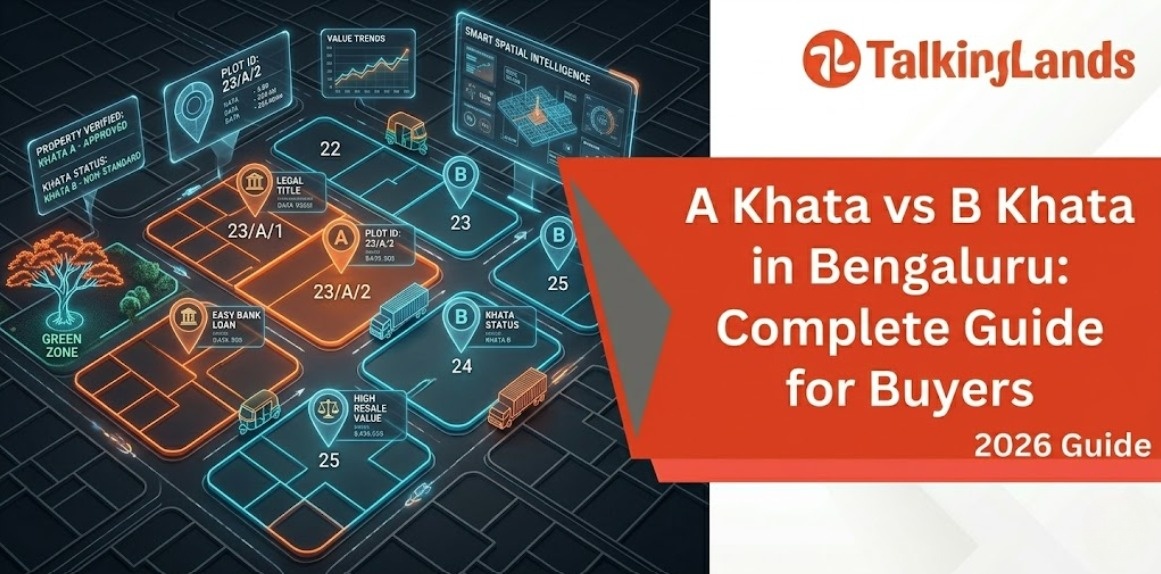
If you're buying property in Bengaluru—a flat, an independent house, or even a plot—there's a phrase you'll hear over and over: "Is it A Khata or B Khata?".
Most first-time buyers nod along, sign the papers, and only realise the difference later—when their home loan gets rejected, when a Cauvery water connection is denied, or when they try to resell and the offers come in 15–20% lower than expected. This guide breaks it down properly, in plain language, so you can make a confident decision before you part with any money. To truly safeguard your investment, generating detailed property reports bangalore is highly recommended to uncover the actual legal standing of your land.
The Khata (literally "account") is a revenue document maintained by the BBMP—Bruhat Bengaluru Mahanagara Palike, Bengaluru's civic body. It identifies the property owner for the purpose of paying property tax.
The Khata is not a title document and does not prove ownership. What it does prove is that the property is recognised by BBMP, taxes are being paid, and the property is legally fit to be transacted, mortgaged, and built upon. That single distinction—recognised by BBMP, or not—is where the two categories of Khata, called A Khata and B Khata, go their separate ways.
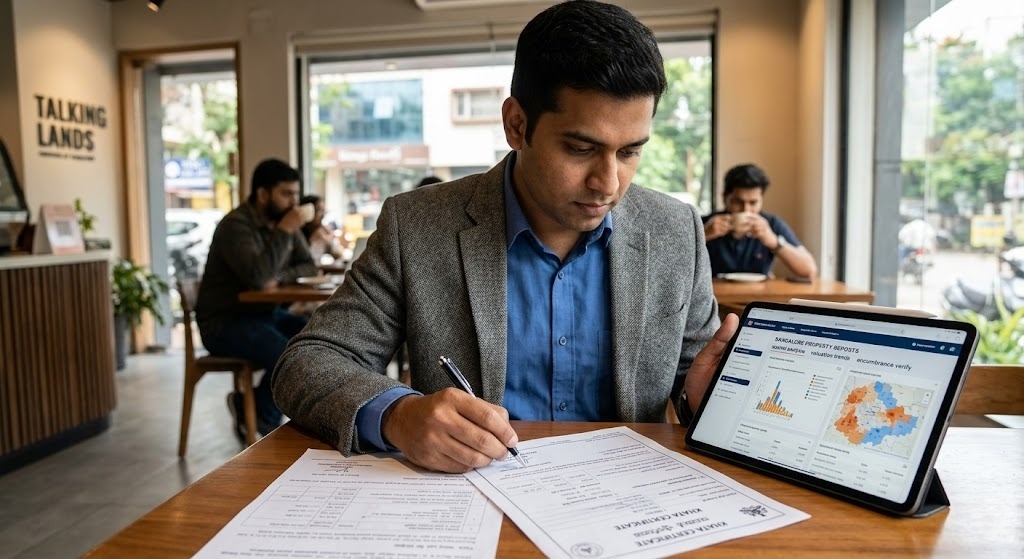
A property earns its A Khata when all of these are true:
An A Khata property is BBMP-approved in every sense and is fully eligible for home loans, resale, and civic services.
But here's the catch most buyers miss: The land being A Khata does not automatically mean your flat is A Khata. This is the single biggest trap in Bengaluru's apartment market.
Imagine a builder owns an acre of A Khata land, and BBMP approves a plan for 40 flats with conditions like adequate setbacks, a sewage treatment plant (STP), and rainwater harvesting. If the builder constructs 60 flats instead, or skips the STP, the land retains its A Khata status, but the unapproved flats—and often all 60—cannot get individual A Khatas. You may have bought "an A Khata apartment" in good faith, but on paper, your flat is B Khata.
A property is classified B Khata when one or more of the following apply:
In short: B Khata is BBMP's way of saying "we see this property, but we don't fully recognise it".
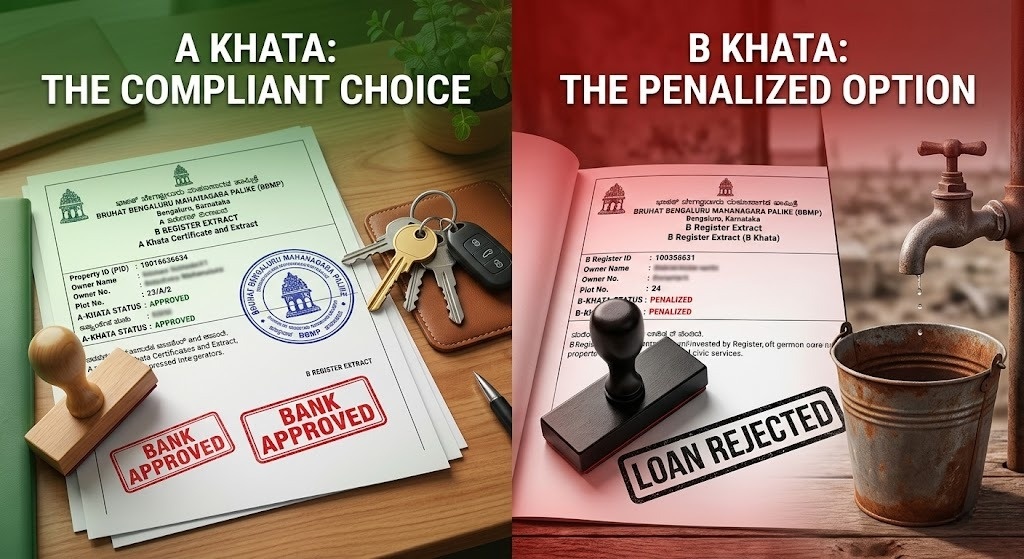
This is where theory becomes painful reality. Three consequences every buyer should weigh seriously:
If you're buying a flat, do not stop at "the land is A Khata." Verify:
Your "undivided share of land" (UDS) is the slice of the land you legally own. If the builder splits one acre among the approved 40 flats, each owner gets a meaningful share. If the builder squeezes in 60 flats, the same acre is divided 60 ways—your UDS shrinks, the building is more cramped, and resale value falls.
This is exactly why TalkingLands built Insights—India's first institutional-grade spatial intelligence platform for real estate. It combines parcel-level land records, infrastructure signals, risk data, connectivity layers, and AI-powered location reports in a single subscription product.
When you pull property reports bangalore through the TalkingLands platform, you receive a structured PDF complete with scores, pros & cons, and snapshots. Your instant property report covers deep intelligence on gated communities, apartments, and plotted developments, including boundary zoning, flood indices, Rajakaluve risks, and upcoming high-speed transit proximity.

A short checklist that takes a day but can save you years of regret:
A Khata properties cost a little more, but they protect everything that comes after the purchase—your loan, your services, your resale, your peace of mind. B Khata properties may look like a bargain on day one, but the discount usually evaporates the first time you try to take a loan against the property, connect water, or sell.
When in doubt, the rule is simple: don't sign until the Khata is clear. Be wise. Buy right.
1. Can a B Khata property be converted to an A Khata?
Yes, in many cases, a B Khata property can be converted to an A Khata under the Akrama-Sakrama scheme or by paying the pending betterment charges, property taxes, and regularisation penalties to the BBMP. However, this is subject to government approvals and the extent of the building's deviations from the sanctioned plan.
2. What is the difference between a Khata Certificate and a Khata Extract?
A Khata Certificate is required for registering a new property or transferring ownership. A Khata Extract is a detailed document that specifies property details like size, location, built-up area, and property tax assessment, primarily used to obtain trade licenses or loans.
3. Is it safe to buy a B Khata property with cash?
While you won't face the hurdle of bank loan rejections if you buy with cash, you still absorb all the long-term risks: lower resale value, potential denial of civic amenities like Cauvery water, and the looming threat of municipal action if the building has severe code violations.
4. Why is the Occupancy Certificate (OC) so important?
An Occupancy Certificate is a document issued by the civic authority (like BBMP) certifying that a building has been constructed according to the approved plans and is safe for habitation. Without an OC, the building is technically unauthorized, making it difficult to secure A Khata, loans, or permanent water and electricity connections.
5. Do I still need a lawyer if I have all the BBMP documents?
Absolutely. BBMP revenue documents only confirm tax status and municipal recognition; they do not prove legal ownership. A qualified property lawyer is required to perform a 30-year title search to ensure the seller has the legal right to sell the land and that there are no hidden encumbrances or family disputes tied to the property.