.png)
Chennai Water Metro (2026): Route, the Buckingham Canal Plan & What It Means
Chennai’s major arterial roads—specifically the Old Mahabalipuram Road (OMR) and East Coast Road (ECR)—face paralyzing traffic bottlenecks during peak hours, while the city's historic coastline and vast network of canals sit largely unused for transit. For decades, restoring Chennai's waterways was viewed as an environmental necessity, but rarely as a scalable mass-transit solution.
The success of the Kochi Water Metro has fundamentally shifted that perspective. Proving that battery-electric ferries can seamlessly integrate with land-based rail and bus networks, the model has inspired Chennai to look back to its own waters. Now, the state is actively exploring a dedicated Chennai Water Metro running along the historic Buckingham Canal.
While the concept has ignited immense curiosity and waterfront real estate buzz, the project is still in its infancy. Here is the 2026 reality of the proposed Chennai Water Metro, the exact route under evaluation, the massive cleanup challenges ahead, and what the current feasibility study actually means for the city.
Quick Answer: The Chennai Water Metro is a proposed inland water-transport system featuring battery-electric ferries running along the Buckingham Canal. The envisioned route covers an approximate 53-kilometer stretch from Ennore in the north to Mamallapuram in the south. Modeled after the successful Kochi Water Metro, the project is currently spearheaded by Chennai Metro Rail Limited (CMRL). As of August 2026, CMRL has floated a tender for a Detailed Feasibility Report (DFR) and Detailed Project Report (DPR). The project is at the feasibility and planning stage; it is not yet approved, funded, or under construction. Preliminary discussions suggest an initial operational stretch could connect Napier Bridge to Kovalam, pending rigorous water-quality and topographical assessments.
What is the Chennai Water Metro?
The water metro concept moves public transit off congested roads and onto existing waterways. Unlike traditional, slow-moving tourist boats, a water metro operates as a high-frequency mass rapid transit system.
- The Fleet: The proposed system will utilize modern, eco-friendly battery-electric ferries to drastically reduce carbon emissions and noise pollution along the residential canal banks.
- The Terminals: The project involves constructing specialized floating or canal-side passenger terminals equipped with automated ticketing systems that integrate directly with the National Common Mobility Card (NCMC) and existing CMRL metro lines.
- The Kochi Model: At present, India's only operational water metro is in Kochi, Kerala. The Kochi system successfully demonstrated how air-conditioned, high-speed ferries could handle daily commuter volumes while syncing with land-based transit networks. Chennai intends to replicate this multi-modal integration.
Chennai Water Metro — At a Glance
.png)
Route & The Buckingham Canal
The Buckingham Canal is a historic, man-made navigation waterway built during the 19th and 20th centuries, running parallel to the Coromandel Coast. For decades, it was a primary artery for trade before falling into disrepair.
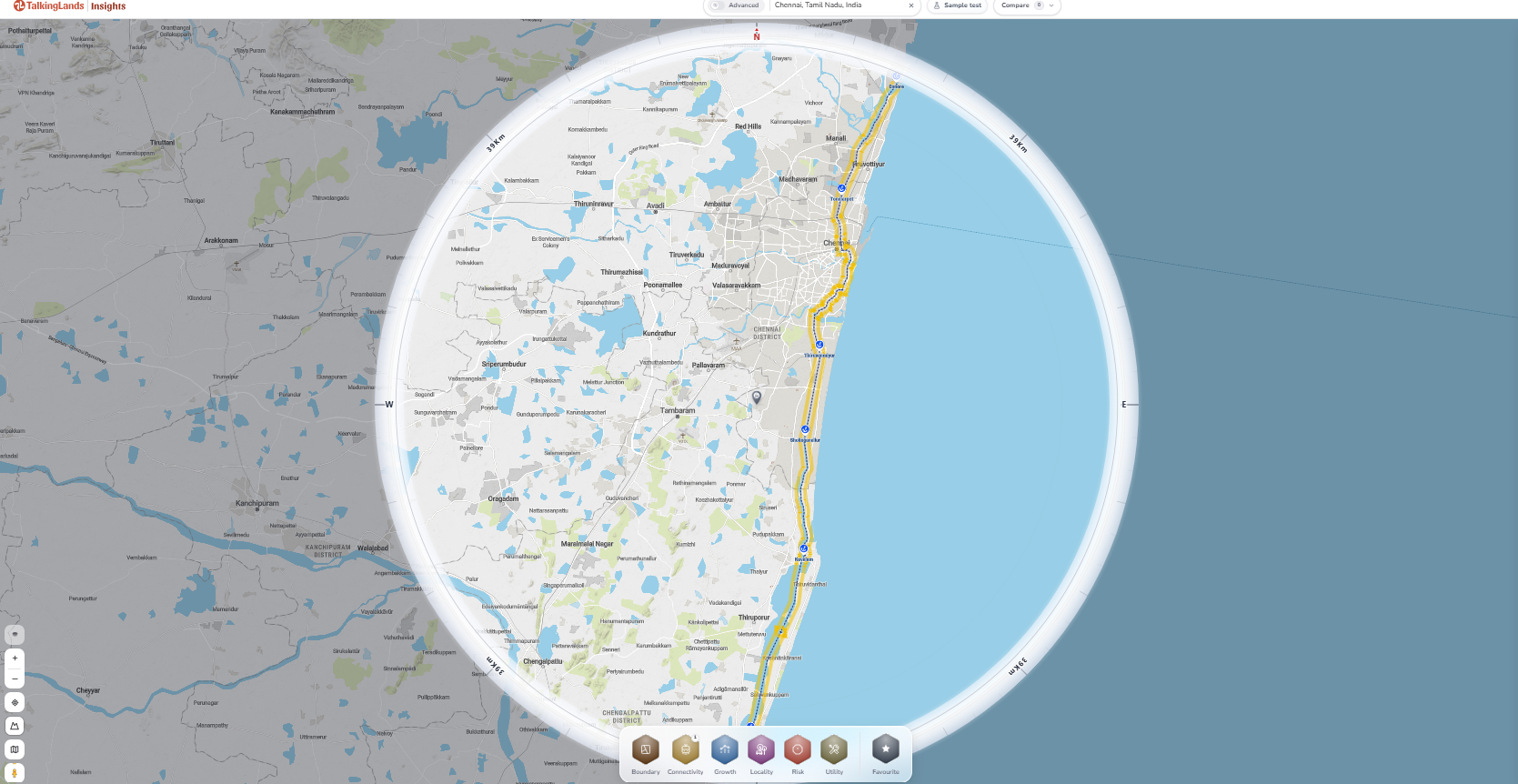
The proposed Chennai Water Metro aims to utilize an approximate 53-kilometer stretch of this canal, connecting the northern industrial node of Ennore with the southern heritage and tourism hub of Mamallapuram.
By running parallel to the coastline, this route acts as a secondary transit spine for the heavily congested southern coastal belt. To test the system's operational viability, authorities have discussed opening an initial pilot stretch from Napier Bridge to Kovalam, servicing commuters traveling towards the IT corridors and coastal residential layouts.
Status & Timeline (The Feasibility Stage)
As of late 2026, the Chennai Water Metro is strictly in the administrative evaluation phase. There are no confirmed station lists or opening dates.
In August 2026, CMRL officially invited bids through its e-procurement portal for a combined Detailed Feasibility Report (DFR) and Detailed Project Report (DPR).
- Tender Timeline: The Request for Proposal (RFP) document was made available on August 19, 2026, with a final bid submission deadline of September 18, 2026.
- The Scope of the Study: The consultancy, expected to span around eight months, will heavily scrutinize whether passenger services can safely operate on the canal. The study will assess water depth, canal topography, flood risks, and environmental impact. It will also project commuter demand, identify terminal locations, and provide the overall financial assessment required before the government can officially sanction the project.
What It Could Mean for Chennai
If the feasibility report yields positive results and the project secures state funding, the water metro will fundamentally alter transit dynamics along the coast. Similar to how the Bengaluru-Hosur Metro aims to bridge critical suburban gaps, a functional waterway system would provide a massive relief valve for Chennai's roads.
- Easing the Southern Suburbs: For residents living and working near the ECR and OMR belts, a water-based alternative would allow commuters to bypass highway gridlock entirely.
- Waterfront Revitalization: A major transit system requires functional, aesthetically pleasing terminals. The introduction of water metro stations could generate commercial interest and waterfront revitalization along Kovalam, Adyar, and Mamallapuram.
- Multi-Modal Hubs: By linking canal terminals with existing suburban rail and CMRL stations, passengers could combine different transport services seamlessly.
The Caveats (Why You Shouldn't Speculate Yet)
While the concept is incredibly promising, waterfront transit proposals in Chennai have a notorious history of stalling.
- Feasibility Does Not Mean Approved: A DPR tender simply means the government is studying the idea. It does not guarantee the project will be built.
- Massive Canal Cleanup Dependency: The Buckingham Canal currently functions as an open sewer in several stretches. It is plagued by heavy pollution, shallow waters, solid waste dumping, and systemic encroachments. The water metro cannot operate until the Tamil Nadu government executes a massive, multi-crore restoration and dredging program for the canal.
- Engineering Hurdles: The canal's alignment frequently intersects with existing Mass Rapid Transit System (MRTS) railway pillars and low-clearance bridges. Navigating passenger ferries through these infrastructural choke points will require complex engineering solutions.
(For updates on regional land and infrastructure expansion, including the Bengaluru-Chennai Expressway, continue tracking major gazette notifications before making real estate commitments).
-p-2000.png)
Frequently Asked Questions
1. What is the Chennai Water Metro?
The Chennai Water Metro is a proposed eco-friendly, inland mass transit system that will utilize battery-electric passenger ferries operating on the city's waterways, modeled heavily on the successful Kochi Water Metro.
2. What is the route of the Chennai Water Metro?
The primary proposed corridor runs along the historic Buckingham Canal, spanning approximately 53 kilometers from Ennore in North Chennai down to Mamallapuram in the south.
3. Which canal will the water metro use?
The system is planned to operate on the Buckingham Canal. However, the canal currently faces severe pollution, shallow sections, and encroachments, which must be fully restored and dredged before passenger boats can operate.
4. Is the Chennai Water Metro project approved?
No. As of mid-2026, the project is strictly in the planning and feasibility stage. The Chennai Metro Rail Limited (CMRL) has only floated a tender to prepare a Detailed Feasibility Report (DFR) and Detailed Project Report (DPR).
5. What is the Kochi Water Metro model?
The Kochi model uses fully air-conditioned, battery-powered electric boats running on a frequent schedule. The system integrates ticketing and physical terminal access with the city's existing metro rail and bus networks, ensuring seamless multi-modal commuting.
6. When will the Chennai Water Metro start?
There is currently no official start date or opening timeline. The ongoing feasibility studies alone will take nearly eight months, after which the state government must review the environmental and financial assessments before sanctioning physical construction.
.png)

.png)