7/12 Extract (Satbara) Maharashtra 2026: How to Check & Download Online
7/12 Extract (Satbara) Maharashtra 2026: How to Check & Download Online
Consider a common scenario when buying agricultural or fringe-village land in Pune, Nashik, or Nagpur: A buyer negotiates a great price, and the seller produces a clean, printed copy of the land's ownership document. The transaction completes smoothly. Six months later, the buyer receives a severe notice from a local cooperative bank. It turns out the seller had taken a massive crop loan against the land years ago. Because the buyer didn't pull a fresh 7/12 extract and check the "Other Rights" column, they inadvertently inherited an undischarged bank loan that legally transferred with the property.
In Maharashtra, a Sale Deed proves you paid for the land, but it is the 7/12 extract (commonly known as the Satbara Utara) that proves the land's legal standing.
Whether you are a farmer applying for subsidies, an investor buying agricultural parcels, or a developer assembling a land bank, this is your complete 2026 guide to downloading the 7/12 extract online via Mahabhulekh, decoding its complex Marathi terminology, and spotting critical legal red flags before you invest.
Quick Answer: A 7/12 extract (Satbara Utara) is an official land record issued by the Maharashtra Revenue Department that combines Form 7 (Record of Rights/Ownership) and Form 12 (Register of Crops). It provides legal proof of land ownership, survey/Gat numbers, area, and encumbrances like bank loans or tenant rights. You can view it for free on Mahabhulekh (bhulekh.mahabhumi.gov.in) or download an officially signed digital version via Digital Satbara (digitalsatbara.mahabhumi.gov.in). To skip portal server queues, you can pull verified, digitally signed land documents directly via Patra.
What Is a 7/12 Extract (Satbara Utara)?
The 7/12 extract is the foundational land record for rural and agricultural areas in Maharashtra. Maintained by the local Talathi (village revenue accountant) under the state's Revenue Department, the document derives its name from the two distinct forms it merges:
Form 7 (Adhikar Patrak / Record of Rights): This section details the legal ownership of the land, the total area, the names of the occupants, and any financial liabilities or legal restrictions resting on the title.
Form 12 (Pik Perani Nondvahi / Register of Crops): This section records the agricultural use of the land, detailing the types of crops grown, the area under cultivation, and irrigation sources.
A genuine, up-to-date Satbara provides a complete x-ray of the property's legal and agricultural status. It officially records:
Gat / Survey Number: The unique geographical identifier of the land parcel.
Area Details: The total extent of the land, measured in Hectares and R (Ares), separating cultivable land from uncultivable land (Pot Kharaba).
Khatedar (Owners): The names of all registered owners and their specific fractional shares.
Ferfar (Mutation) Entry Numbers: Reference numbers tracking the historical transfer of the land from previous owners to the current ones.
Itar Hakka (Other Rights & Encumbrances): The most important section for buyers. It lists active bank loans (boja), third-party liens, court injunctions, and specific tenant rights.
How to Check & Download the 7/12 Online (Step-by-Step)
In 2026, the Maharashtra government operates two primary portals for accessing land records. Your approach depends on whether you just want to read the document or if you need a legally valid copy for registration.
Method 1: Free View via Mahabhulekh (For Information Only)
If you only need to verify owner names or check for loans before negotiating, you can view the record for free.
Visit Mahabhulekh: Go to bhulekh.mahabhumi.gov.in.
Input Location: Select the specific District, Taluka, and Village from the dropdown menus.
Search: You can search by Survey Number/Gat Number, First Name, Last Name, or Full Name.
View: Enter the CAPTCHA code to view the un-signed, informational PDF.
Method 2: Download via Digital Satbara (Legally Valid / Digitally Signed)
If you need the 7/12 to secure a bank loan, apply for a building sanction, or attach to a Sale Deed, you must download the digitally signed version.
Visit Digital Satbara: Go to digitalsatbara.mahabhumi.gov.in.
Login / Register: Create an account using your mobile number or use the OTP login.
Recharge Wallet: The portal operates on a prepaid wallet system. You must top up your account using a payment gateway to cover the nominal government fee (typically ₹15 per download).
Download: Select your District, Taluka, Village, and Survey Number, then download the PDF. It will contain an official QR code and a digital signature valid for all legal and official purposes.
How to Read a 7/12 Extract & Spot Red Flags
For many buyers, pulling the document is easy; reading the dense Marathi revenue terminology is the real challenge. When inspecting a Satbara, focus directly on these sections:
Survey/Gat No. & Hissa (Sub-division): Ensure this exactly matches the number on your sale agreement. If you are buying Gat No. 45/2, but the 7/12 shows only Gat No. 45, the land partition hasn't been legally recorded.
Bhogvatdar Varga (Occupant Class):
Class 1: Absolute ownership. The owner can sell the land freely.
Class 2: Government-granted or restricted land (e.g., allotted to marginalized communities or tribal land). Red Flag: You cannot buy Class 2 land without explicit, prior written permission from the District Collector.
Khata No. & Owner Names: Verify that every person listed is signing the sale deed. If an owner passed away, their legal heirs must be mutated onto the record via a Ferfar/Mutation before you buy.
Itar Hakka (Other Rights):The Ultimate Red Flag Zone. Look for the word "Boja" (burden/liability). This indicates an active bank loan. If there is a loan entry, the seller must clear the debt and secure a bank release letter to strike the entry from the 7/12 before you register the property.
Maharashtra Land Records: The Master Comparison
The 7/12 is just one part of a larger ecosystem of state land records. Depending on what you are buying, you may need different documents.
Key Maharashtra Land Records
Document
What It Shows
Primary Use
Applicability
7/12 Extract
Ownership, area, liabilities, crops
Buying agricultural land, securing crop loans
Rural / Agricultural
8A Extract
A single owner's total land holdings across a village
Tax assessment, proving total agricultural wealth
Rural / Agricultural
Property Card
City Survey (CTS) No., urban ownership, area
Buying city apartments, urban plots, securing home loans
Urban / City Limits
Ferfar (Mutation)
Chronological history of ownership transfers
Tracing the chain of title, proving legal inheritance
Universal
7/12 Extract vs. Property Card
A frequent source of confusion is whether to ask for a 7/12 or a Property Card. The rule is strictly geographical.
If the land is located in a village, a rural area, or on the agricultural fringes outside municipal limits, its ownership is governed by the 7/12 Extract.If the land falls within city limits (subject to a City Survey), agricultural categories are dissolved, and the ownership is governed entirely by the Property Card (Malmatta Patrak), mapping the land via a CTS Number instead of a Gat Number. You do not need a 7/12 to buy a flat in downtown Mumbai.
What a 7/12 CANNOT Show (The Blind Spots)
A flawless, loan-free 7/12 extract is a legal requirement, but it is not a complete shield against bad investments. The 7/12 only reflects revenue and taxation records. It cannot show spatial or physical reality.
It Cannot Show Boundaries: The 7/12 states you own 2 Hectares, but it does not map the physical borders. For that, you need to check the official Bhunaksha (Cadastral Map) to ensure neighbors haven't encroached on your acreage.
It Cannot Show Ecological Buffers: A 7/12 will not warn you if your plot sits inside a restricted river buffer or a highway expansion zone.
It Cannot Show Zoning: The document may list the land as agricultural, but it won't tell you if the local master plan has zoned it as an unbuildable green belt or an upcoming residential corridor.
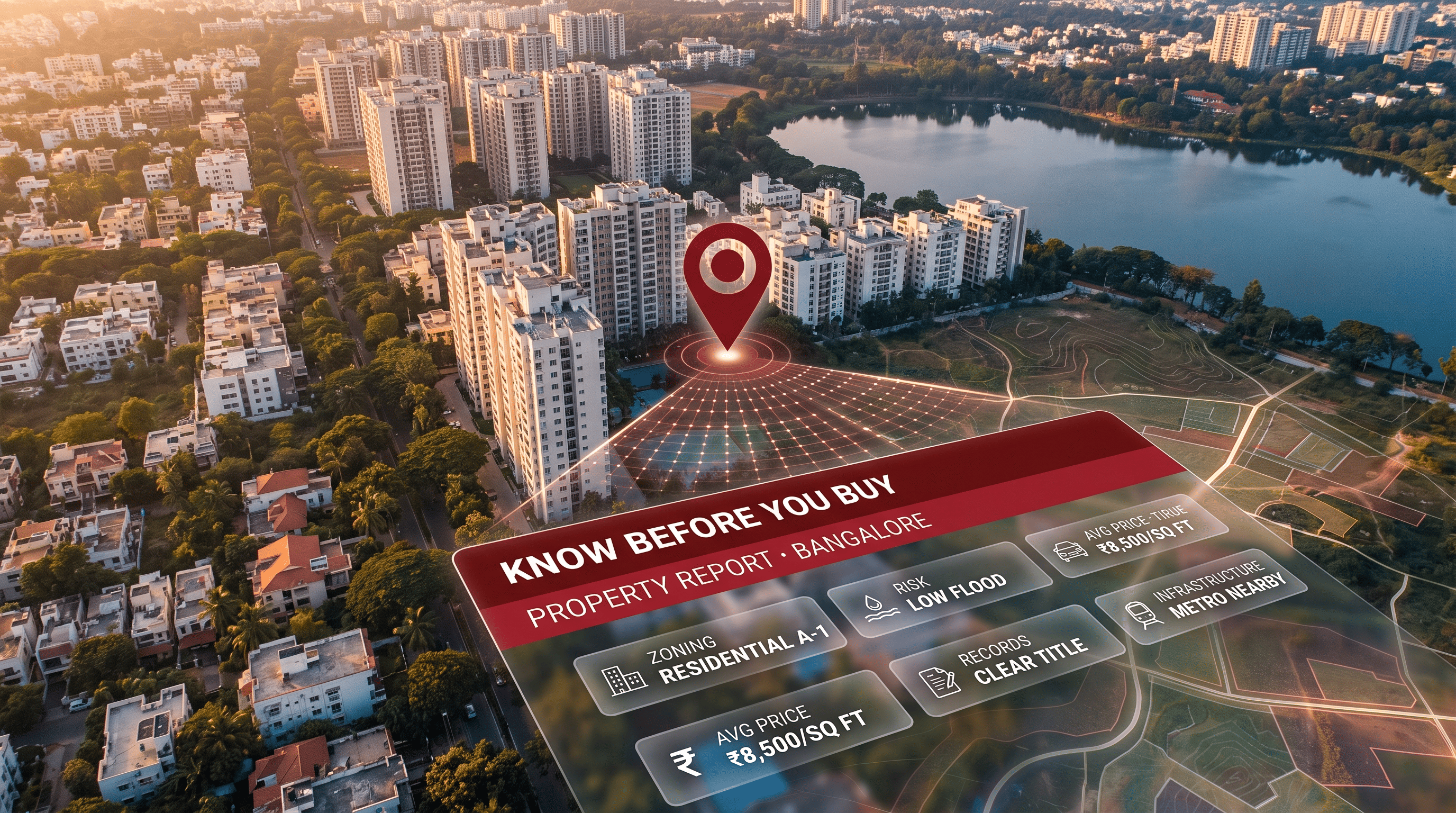
To secure an investment, you must bridge the gap between paper documents and ground reality. After pulling your 7/12, cross-reference your exact Gat Number using platforms like TalkingLands Insights to instantly look up the parcel geometry and verify live ownership intelligence against the paper record.
.png)
.png)



.png)
.png)