Key takeaways
- Judge every lead source on cost per site visit and cost per booking, not cost per lead.
- Portals and social ads bring volume; search ads, referrals and partners usually bring more intent. Use a mix, and measure each one separately.
- Most leads are lost after they arrive: slow first response, generic PDFs, and no way to tell who is serious.
- Send each lead a personal project link instead of a brochure. Whether they open it, and what they look at, tells you who to call first.
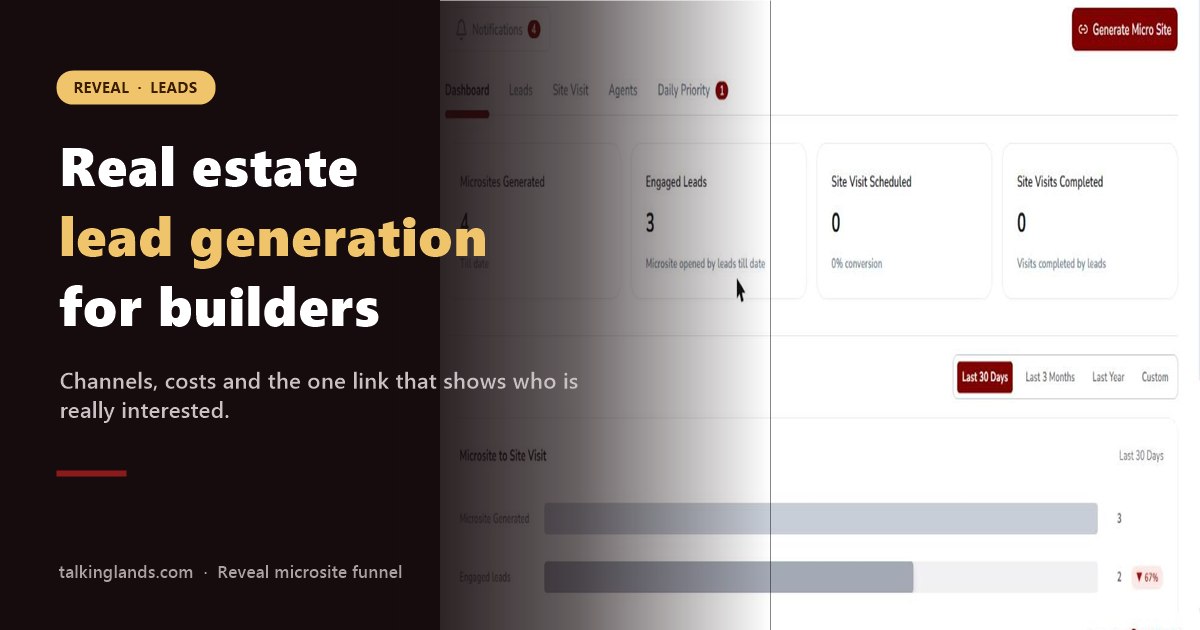
- In Reveal, one click generates that link for a named buyer, and the dashboard tracks the funnel from link to engaged lead to site visit.
- Collect consent properly: the DPDP Rules and TRAI's calling rules apply to property leads too.
Which lead source really costs you least per booking?
The example numbers are illustrative; replace them with your own monthly figures. Nothing you type is sent anywhere.
| Channel | Spend (₹) | Leads | Site visits | Bookings |
|---|---|---|---|---|
| Property portals | ||||
| Meta ads | ||||
| Google search ads | ||||
| Referrals and events |
Most builders do not have a lead problem. They have a lead sorting problem. A launch month brings hundreds of enquiries from portals, ads and partners; the sales team calls them in the order they arrived; the serious buyer who looked at three units last night waits behind fifty people who never meant to buy. Real estate lead generation only works when it ends in site visits and bookings, so this guide covers both halves: where leads come from, and how to see who is serious.
What lead generation means for a builder
For a developer, lead generation is everything that produces a named, contactable person interested in a specific project, captured with its source. It is the front of the funnel. What happens next, response, prioritisation and follow-up, is lead management. The two have to be designed together, or a cheap lead source can look good on paper and produce nothing.
Lead sources compared
| Source | Typical intent | Good for | Watch out for |
|---|---|---|---|
| Property portals | Medium: buyers comparing many projects | Steady volume, visibility in a micro-market | The same lead sent to several builders |
| Meta (Facebook, Instagram) ads | Low to medium | Reach, launches, retargeting | High volume of casual form-fills |
| Google search ads | High: people searching for the project or area | Capturing active buyers | Rising cost on competitive keywords |
| Channel partners and brokers | Medium to high | Reaching buyers you cannot reach directly | Lead ownership disputes without tracking |
| Website and content (SEO) | Medium to high | Long-term, low marginal cost | Slow to build |
| WhatsApp click-to-chat | Medium | Fast conversations on mobile | Chats that never reach the CRM |
| Referrals from buyers | High | Trust, lower cost per booking | Only works once you have happy buyers |
| Site events, hoardings, walk-ins | High, local | Buyers who already know the area | Hard to attribute without a link or code |
Try your own numbers in the calculator above. In the example, Meta ads produce the most leads but the highest cost per booking, while referrals produce the fewest leads and the lowest cost per booking.
Where leads are lost
The one-link method: see who is serious
Instead of a brochure, send every new lead a personal link to the project: a live page with the location, towers or plots, units, prices and a site visit button. When they open it, you know. When they look at specific units, you know which. That is the best signal there is for who to call first. We cover the idea in depth in our guide to property microsites; here is how it works in Reveal.
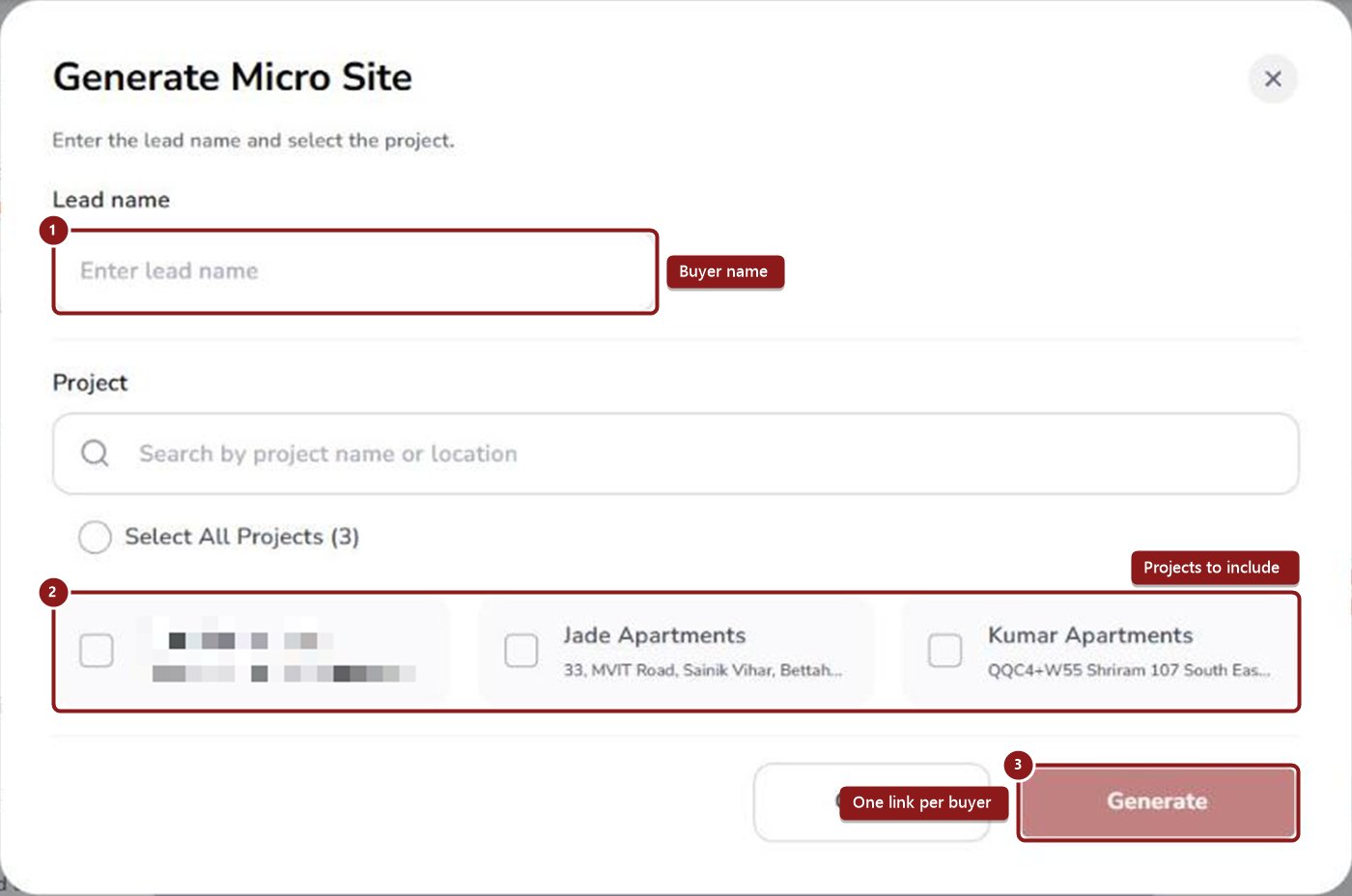
- 1Type the buyer's name.
- 2Choose the projects to include. Only projects set to public appear here.
- 3Generate. Reveal creates one link for that buyer, ready to share on WhatsApp or email.
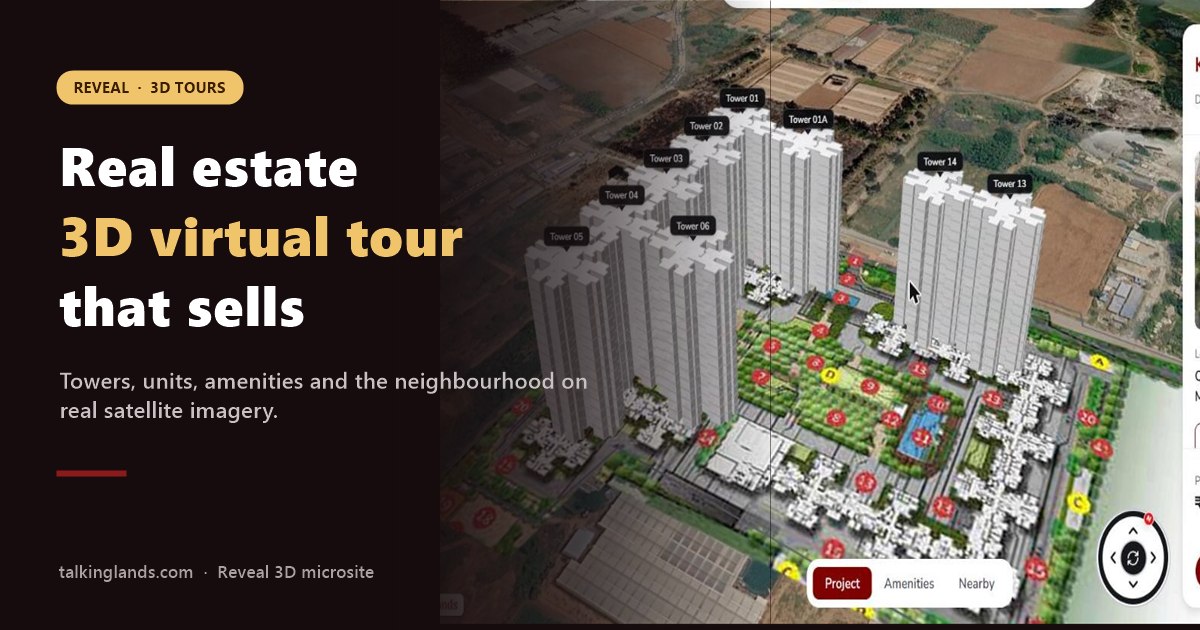
The buyer opens a 3D project page on satellite imagery, the same one we walk through in our real estate virtual tour guide, and can book a site visit from it.
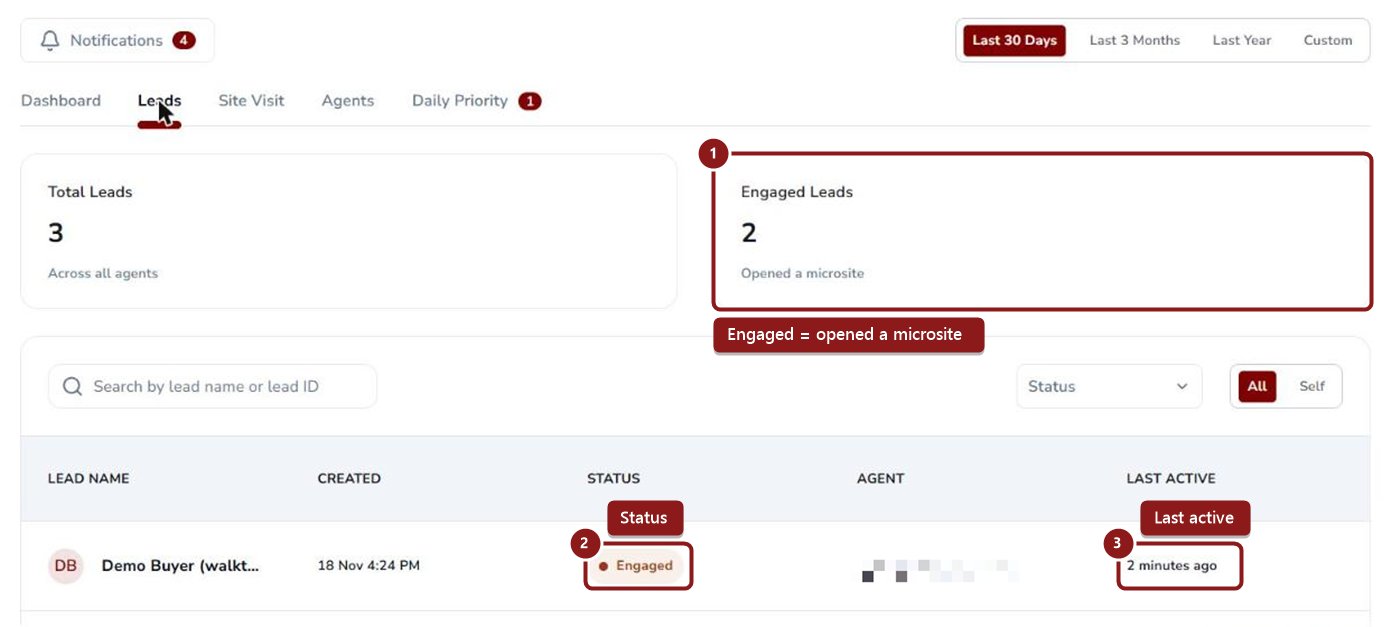
- 1Engaged leads: buyers who opened their microsite.
- 2Each lead's status. Our test buyer showed as Engaged as soon as the link was opened.
- 3Last active time, so the freshest interest goes to the top of the call list.
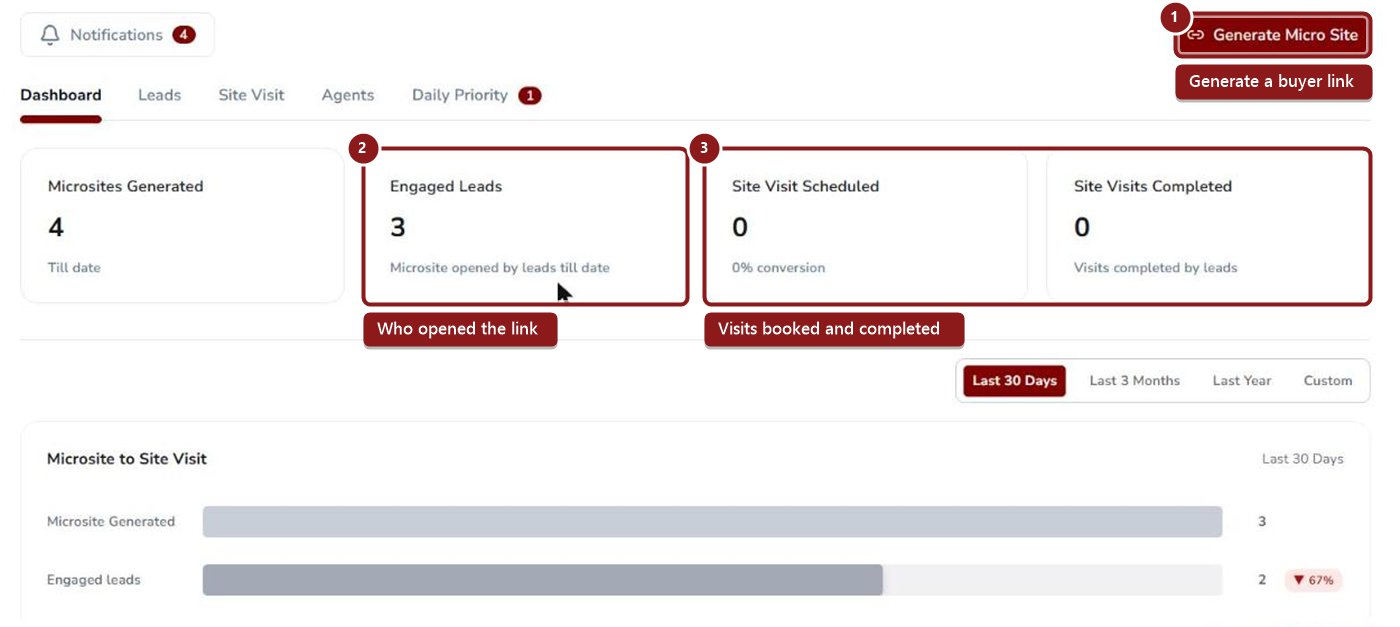
- 1Generate a new buyer link from anywhere in the module.
- 2How many leads opened their link.
- 3Site visits scheduled and completed, the numbers that matter.
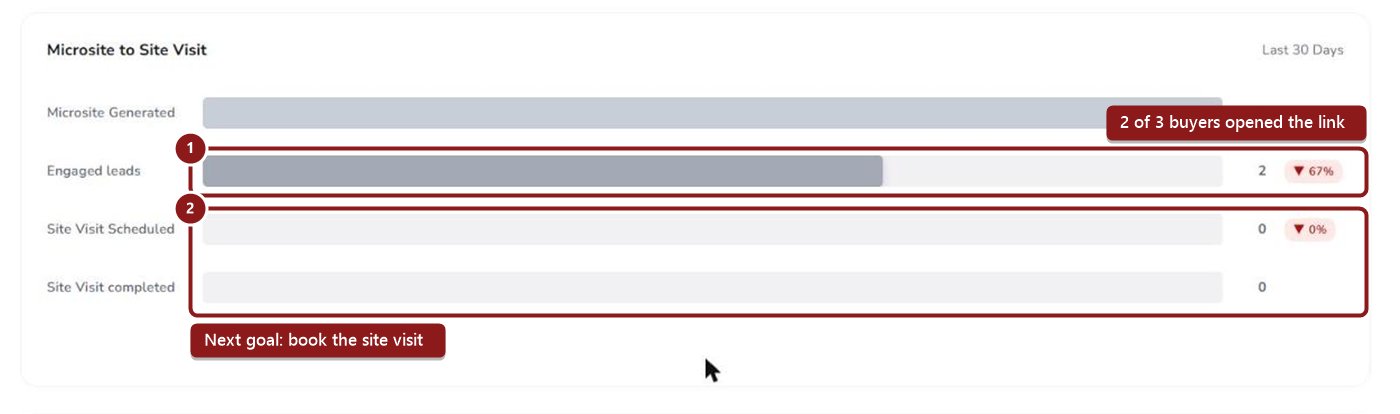
- 12 of 3 buyers opened their link in this demo account.
- 2The next stage to work on: turning engaged buyers into booked site visits.
10 real estate lead generation ideas that work with this method
What to measure every week
- Leads by source, and cost per lead.
- Time to first response, by source and by executive.
- Engaged rate: out of every 100 leads, how many opened their link.
- Site visits scheduled and completed, and cost per visit by source.
- Bookings and cost per booking by source: the number that should move budget.
Consent and calling rules
Lead lists are personal data. The Digital Personal Data Protection Rules, 2025 set notice and consent duties, with most business duties applying from around May 2027, and TRAI's rules require promotional calls to come from registered 140-series numbers and respect DND preferences. Put a clear consent line on every form, record each lead's source, avoid lists you cannot trace to a consent, and take legal advice for your setup. Our lead management guide covers this in more detail.
Know which leads are serious before you call
Reveal gives every buyer their own 3D project link, tracks who opens it and what they look at, and follows each lead through to the site visit and booking.
Book a free demoFrequently asked questions
It is how a developer or broker attracts enquiries from people likely to buy, through portals, ads, partners, the website, WhatsApp, referrals and events, and captures each one with its source so it can be followed up and measured.
It depends on the project and city. Compare channels on cost per site visit and cost per booking, not cost per lead. A channel with fewer, more serious leads often wins on bookings.
Search ads for high-intent queries, useful local content and neighbourhood guides, WhatsApp click-to-chat, referral offers to existing buyers, tracked links for channel partners, and site visit events. Each still needs tracking from source to booking.
Look at behaviour. Send each lead a personal project link and see whether they open it, which units they look at and whether they come back. Engaged leads should be called first.
Leads by source, time to first response, the share of leads who engage, site visits scheduled and completed, bookings, and cost per lead, per visit and per booking for each channel.
Yes. The DPDP Rules 2025 set notice and consent duties for personal data, with most business duties applying from around May 2027, and TRAI rules require promotional calls to come from registered 140-series numbers and respect DND preferences. Take legal advice for your setup.
Calculator figures are illustrative examples, not benchmarks. Reveal screens are from a TalkingLands demo account in November 2026; features can change, so confirm them in a demo. The summary of data protection and calling rules is general information, not legal advice.